Summary of findings
- Guarding is involuntary muscle tension around an injured or threatened area. It limits movement so the tissue is not stressed further.
- It is useful in the days after a crash and costly as a habit: stiff segments load the segments next to them.
- Most people do not notice their own guarding. Other people, and an exam, do.
- The Lab's protocol: a posture change after a known event is a prompt to get examined, not a flaw to be corrected by willpower.
The Lab was founded on a refusal. It refuses to grade posture. Slouching is not a character defect, a forward head is not a moral failing, and the person at the next desk with one shoulder higher than the other is not lazy. Posture is data. The only question the Lab asks of any reading is whether it changed, and if so, after what.
That question has one answer that shows up in the notebook more than any other: the reading changed after a car crash, and the change has a name. Guarding.
What guarding is
When tissue is injured or threatened, the muscles around it tighten. The neck stops turning as far. The shoulders rise toward the ears. The trunk stiffens, the stride shortens, the head drifts forward because looking down hurts less than looking up. None of this is chosen. It is the body splinting itself, the way you would wrap a sprained wrist, except the wrap is made of your own muscle and it goes on without asking.
In the first days after a collision this is helpful. Limiting motion protects strained ligaments and muscle from further load while the early swelling settles. The Lab's objection is not to guarding. It is to guarding that nobody measures, because unmeasured guarding does not know when to stop.
Why it feels like nothing
Here is the observation that makes this entry worth writing. The person doing the guarding usually cannot feel it. Tension that is constant stops registering. What they feel is the downstream effect: a headache by mid afternoon, a low back that aches after driving, a hand that tingles at the keyboard, fatigue that does not match the day. They attribute those to stress, or the office chair, or getting older.
Other people notice first. A spouse says you are holding your head funny. A coworker asks why you turn your whole body to look at them. A coach sees the shortened stride from across the field. The Lab treats those remarks as readings from an external instrument, and a reliable one.
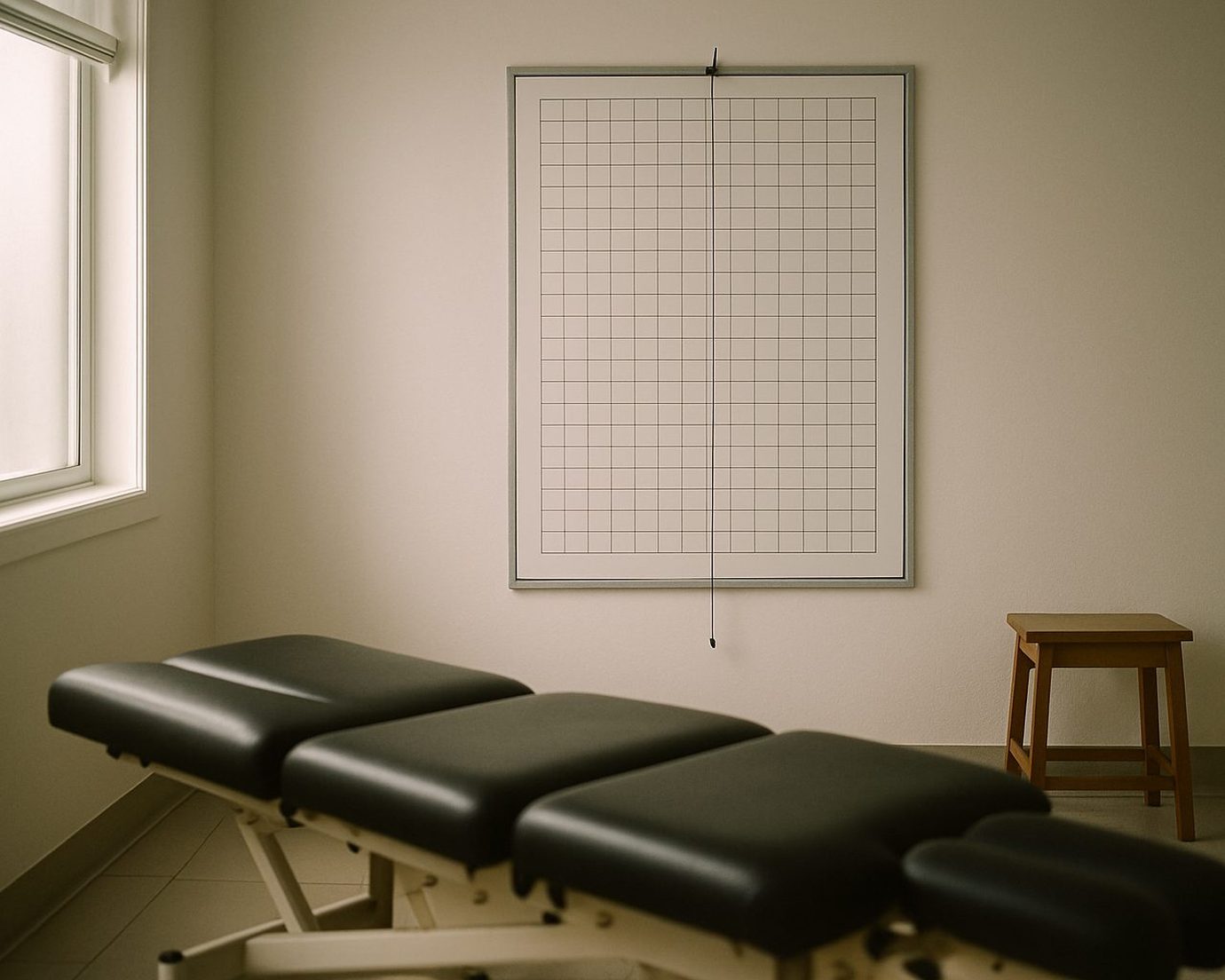
How a week becomes the new normal
Muscle that is held short adapts to being short. Joints that are not moved through their range lose range. The segments next to a stiff segment take over the motion it gave up, and they were not built for the extra work. A neck that stopped turning at day three is, by week six, a neck that cannot turn, an upper back doing the turning for it, and a headache that now arrives on schedule.
This is why the Lab does not trust the phrase "it will loosen up." Sometimes it does. Sometimes the guarding gets written into the system as the baseline, and the next clinician who sees you has no way of knowing it was ever different. A dated exam in the crash week is the measurement that makes the difference visible. The notebook entry explains why the date matters.
The protocol
- Notice the change, or let someone notice it for you. A reading you can describe in one sentence is enough: "I cannot check my blind spot on the left since Tuesday."
- Link it to the event. Guarding after a known event, especially a collision, is the amber flag. Guarding with no event is a different entry; see desk years or crash week.
- Get examined, not corrected. Do not stand up straighter by force and call it solved. Willpower applied to a guarded neck is a good way to make it guard harder.
- Leave with findings and a written plan, and follow the plan. The first exam protocol describes what that visit is.
What the clinic publishes about this
Missouri Injury Clinic publishes auto injuries as a lane, defined as diagnosis and a treatment plan after a crash. Joseph L. Hollingsworth, DC, runs the clinic. The Lab does not describe treatment it has not seen and does not promise outcomes. What it can say is that the first visit is an exam with findings and a written plan, which is exactly the instrument guarding needs.
The one action this desk sells
A posture that changed after a crash is a reading, not a verdict.
Get it measured this week at Missouri Injury Clinic. A clean exam resets your baseline with confidence; a positive finding starts care while the guarding is still a week old and not a year old.
Advertising material for Missouri Injury Clinic. Three offices; pick the one you can drive to this week. Closed daily 12 to 2.
Disclosure. This page is advertising. This desk is compensated for featuring Missouri Injury Clinic, and it is not the clinic, not a law office, and not a party to anyone's insurance claim. We publish only the lanes, offices, and hours the clinic publishes on moinjuryclinic.com. We do not write reviews, rank providers, or give medical or legal advice. This entry is educational and is not medical advice.