Summary of findings
- The head restraint, commonly called the headrest, exists to limit how far the head travels backward relative to the torso in a rear-end impact.
- A restraint set too low or too far back does less. The general guidance is the top of the restraint near the top of the head, close to the back of the head.
- How you sit before the impact, reclined, leaning forward, head turned, changes how the neck loads when it comes.
- None of this changes the protocol afterward: a change after a crash is a reading, and the reading gets examined.
Most of the notebook is about what happens after a collision. This entry walks backward to the thirty seconds before, because the Lab noticed something while listening to people describe their crashes: almost nobody had ever adjusted the head restraint in the car they were hit in, and many could not say where their head was when the impact came. Both facts shape what the neck does next.
What the head restraint is for
The thing most people call a headrest is a head restraint, and it is not for resting. Its job is to catch the head during a rear-end impact, when the seat pushes the torso forward and the head, having nothing behind it, lags and then whips. The restraint shortens that lag. The National Highway Traffic Safety Administration regulates head restraints as safety equipment and publishes its guidance at nhtsa.gov; the Lab's summary of the general advice is that the top of the restraint should be near the top of the head and the gap between the restraint and the back of the head should be small.
The Lab does not claim a well set restraint prevents injury. It claims a poorly set one does less, which is the more modest and more defensible observation.
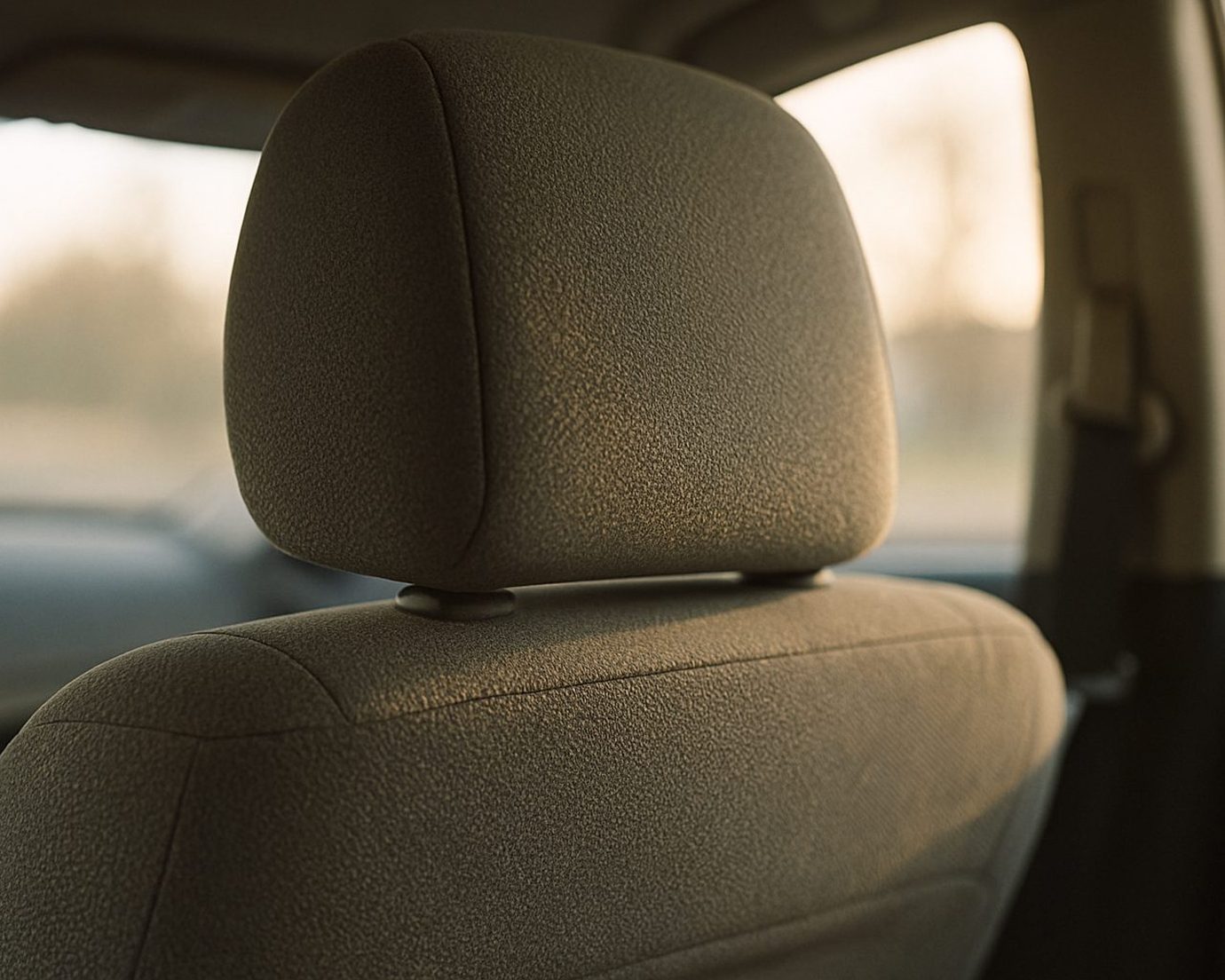
The driving posture, read as a set of readings
The Lab treats the way a person sits in a car as a posture reading like any other, and a surprisingly consistent one. Most people have one driving posture and keep it for years. Here are the readings the notebook takes, and what each one means for the moment of impact.
- Recline angle. A deeply reclined seat puts the head far forward of the restraint. In a rear-end impact the head has farther to travel before anything catches it.
- Forward lean. Leaning toward the wheel in traffic does the same thing from the other direction. The gap behind the head grows.
- Head turned. Checking a mirror, looking at a passenger, turning toward the blind spot. A neck that is rotated at impact loads asymmetrically, which is one reason so many people describe one-sided pain afterward.
- Braced or relaxed. People who see it coming brace: hands locked, shoulders up, jaw set. People who do not see it coming are loose. Both patterns show up in the notebook; neither is something you can plan.
- Belt position. The shoulder belt across the collarbone is where the first sore spot usually shows up. It is doing its job. A sore collarbone is a reading, not a complaint.
None of this is a lecture on how to sit. The Lab does not grade posture, including the driving kind. The point is that when you describe the crash to a clinician, these details are part of the history, and the history is the first page of the record.
What to check in your own car this week
- Sit as you normally drive. Reach back. Where is the top of the restraint relative to the top of your head? Raise it if it is at your neck.
- How far is the back of your head from the restraint? If it is a fist or more, see whether the seat back can come up a notch.
- Do the same for the passenger seat and, if you carry kids, the rear seats where restraints often sit fully lowered.
- Write down where you were hit from, if you have been hit. Rear, side, front, and what your head was doing. It belongs in the history.
After the impact, the protocol does not change
A well set restraint, a bad one, a braced neck, a relaxed one. Whatever the inputs were, the output is the same: if something changed after the crash, the change is a reading and the reading gets examined inside the week. The crash week entry describes what to expect hour by hour, and the first exam protocol describes the visit. Missouri Injury Clinic publishes auto injuries as a lane, meaning diagnosis and a treatment plan after a crash, with three offices across the metro.
The one action this desk sells
Hit from behind this week? The neck is a reading now.
Bring the crash details, including where you were hit from and what your head was doing. The first visit is a history, an exam, findings, and a written plan.
Advertising material for Missouri Injury Clinic. Three offices; pick the one you can drive to this week. Closed daily 12 to 2.
Disclosure. This page is advertising. This desk is compensated for featuring Missouri Injury Clinic, and it is not the clinic, not a law office, and not a party to anyone's insurance claim. We publish only the lanes, offices, and hours the clinic publishes on moinjuryclinic.com. We do not write reviews, rank providers, or give medical or legal advice. This entry is educational and is not medical advice.