Summary of findings
- A concussion is a mild traumatic brain injury caused by a bump, blow, or jolt to the head or body that makes the brain move inside the skull. No loss of consciousness is required.
- Common readings: headache, fog, trouble concentrating, sensitivity to light and screens, balance trouble, sleep changes, irritability.
- Missouri Injury Clinic publishes a TBI and concussion rehab lane and names its tools.
- Worsening headache, repeated vomiting, increasing confusion, or one-sided weakness is an emergency room trip, not a clinic call.
The Lab started as a notebook about necks and shoulders. It added a section on heads after noticing how often the two travel together. A rear-end impact that strains a neck also jolts the head, and the readings that follow, fog, headache, a dislike of screens, a sense of the room tilting when you turn too fast, are not neck readings. They are the brain reporting in.
What a concussion is, and what it does not require
The Centers for Disease Control and Prevention describes a concussion as a type of traumatic brain injury caused by a bump, blow, or jolt to the head, or by a hit to the body that causes the head and brain to move rapidly back and forth; the plain-language summary lives at cdc.gov/heads-up. The part most people get wrong is the knockout. You do not have to lose consciousness. Most people with a concussion never do. They remember the crash, they drive home, and the fog arrives that evening or the next day.
The Lab's rule is the same as for the neck: a change after a known event is a reading worth taking. The difference with the head is that the Lab will not speculate about it at all. Guessing about a brain is the one habit the notebook bans outright.
The readings
| Reading | What people say | Lab note |
|---|---|---|
| Fog | "I am a half step behind in conversation." | Common; belongs in the exam history. |
| Headache | "Starts at the base of the skull, wraps forward." | Neck and head both; let the exam sort it. |
| Screens | "My phone makes it worse in minutes." | A visual reading; oculomotor work exists for this. |
| Balance | "I stand wider. I hold the rail." | Sensory motor reading; say it on the phone. |
| Sleep | "Either I cannot, or I cannot stop." | Write the pattern down with dates. |
Balance and gaze are the readings the Lab finds most interesting because they change posture directly. A person whose balance is off stands wider, holds the head still, and turns the whole body instead of the neck. That looks like neck guarding from the outside and it may be both. The guarding entry covers the neck side; this entry is the head side.
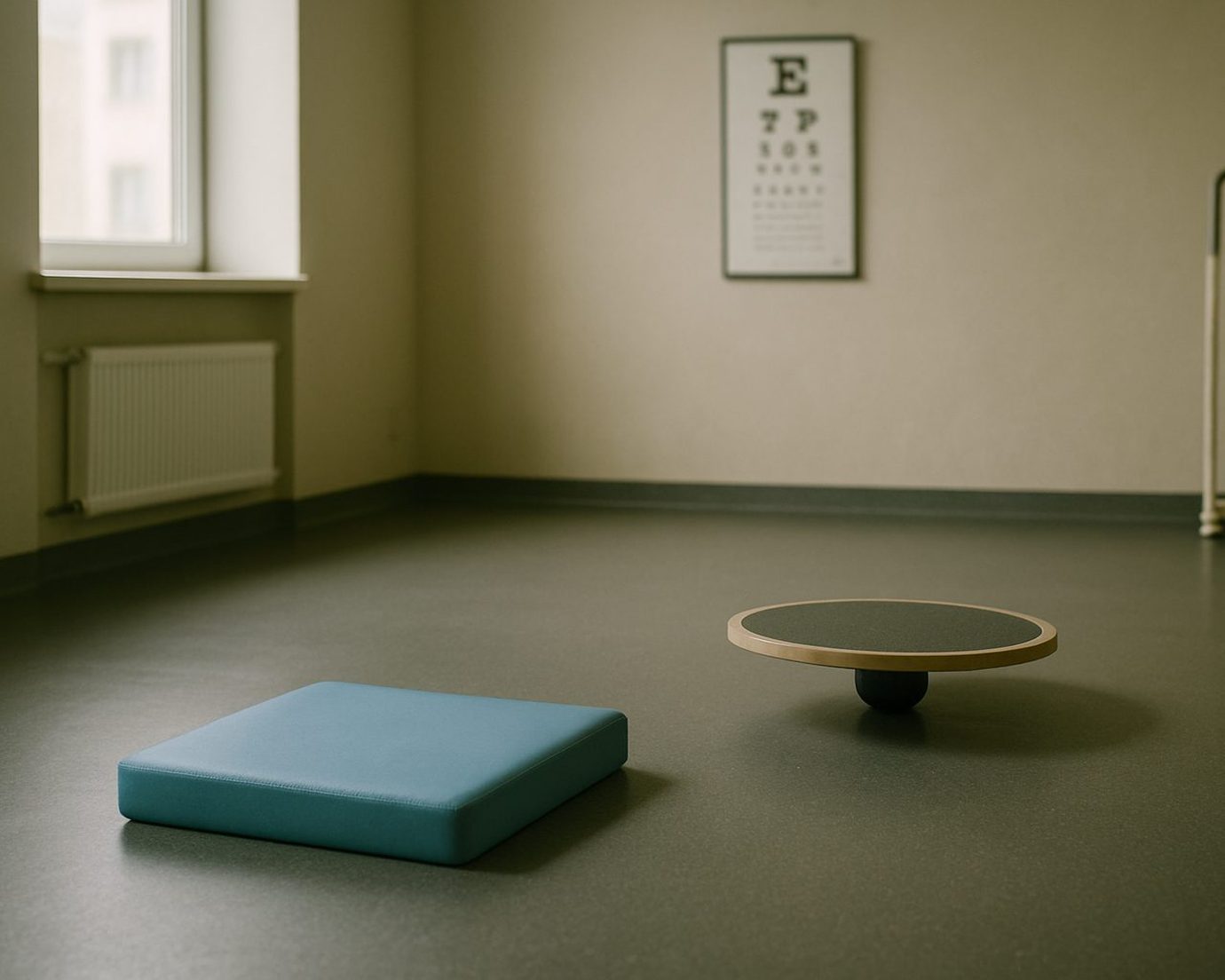
The named tools in the clinic's TBI lane
The Lab likes named methods, and Missouri Injury Clinic names its concussion tools on moinjuryclinic.com. As published: vagus nerve stimulation, described as gentle microcurrent at the tragus; neurofeedback; Alpha Stim; sensory motor integration; exercise with oxygen; oculomotor rehabilitation; and cognitive rehabilitation using computerized brain-exercise software.
The Lab does not describe what any of those feel like, how many sessions they take, or what they will do for you, because it has not examined you and it is not the clinic. What it can say is that oculomotor rehab is the lane for the screen reading, sensory motor integration is the lane for the balance reading, and a clinic that publishes its tools by name is one the Lab can write about honestly. Joseph L. Hollingsworth, DC, runs the clinic.
What to say on the phone
Say the head symptoms first. "I was rear-ended Thursday, my neck is stiff, and since Friday I have had a headache and trouble with screens." That tells the front desk two lanes are involved, auto injury and TBI rehab, and lets them book the right kind of slot. The first exam protocol covers the rest of the call.
The bright line, printed in amber
For a head in particular: a headache that gets worse instead of better, repeated vomiting, increasing confusion or drowsiness, slurred speech, seizures, or weakness or numbness on one side are ER symptoms. The Lab will not soften that, and neither will the clinic.
The one action this desk sells
Fog, headache, screens, balance. Those are readings. Get them examined.
Say the head symptoms first on the call. The clinic publishes a TBI and concussion rehab lane with named tools, and the first visit is an exam with findings and a written plan.
Advertising material for Missouri Injury Clinic. Three offices; pick the one you can drive to this week. Closed daily 12 to 2.
Disclosure. This page is advertising. This desk is compensated for featuring Missouri Injury Clinic, and it is not the clinic, not a law office, and not a party to anyone's insurance claim. We publish only the lanes, offices, and hours the clinic publishes on moinjuryclinic.com. We do not write reviews, rank providers, or give medical or legal advice. This entry is educational and is not medical advice.